by boss | Feb 22, 2020
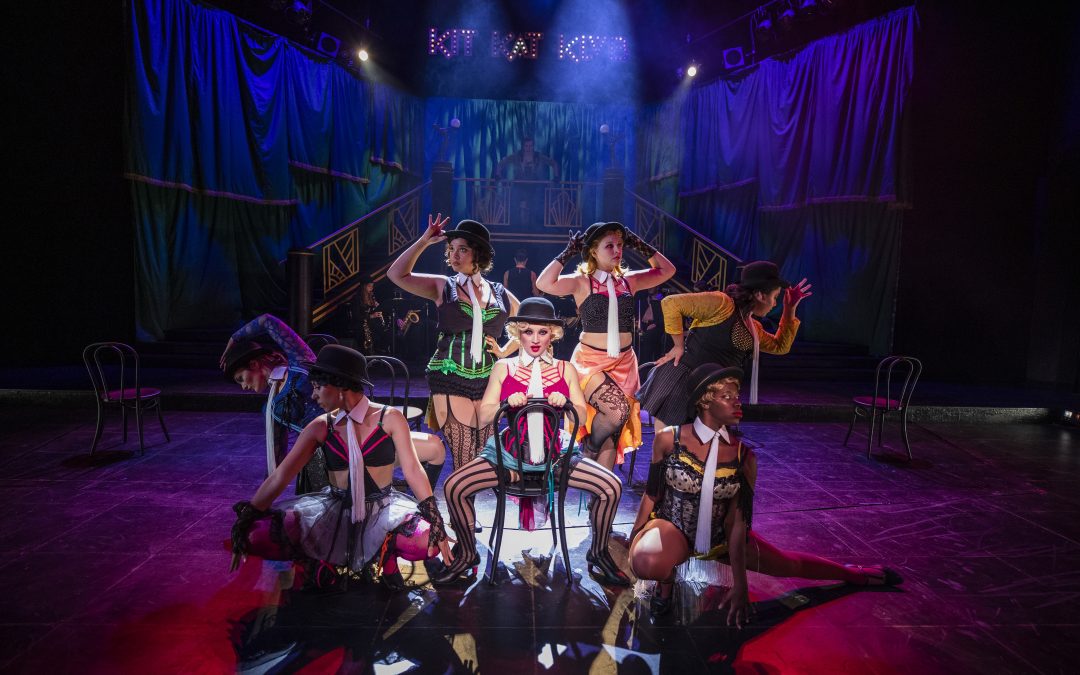
Cabaret has been a favorite on the stage – and on screen – since it debuted in 1966. When Theatre UNI brought Cabaret to their stage at the University of Northern Iowa, they turned to gear from RC4 Wireless to help them achieve their vision. “I had used RC4 products on a handful of shows in the last 3 years and each of those experiences had gone incredibly smoothly,” states Cabaret’s Assistant Lighting Designer, Devin Schupp.
The production required a plethora of wireless gear. Schupp continues: “We had a few different set pieces which contained a practical light fixture on them – this included two Kit Kat Klub tables each having a small table lamp in the center, a floor lamp for the interior of a boarding house, and a cue light that was part of a dressing room mirror for a Klub performer. All of these items were constructed with some variation of either 12V LED tape or individual diodes. Each of these set pieces was carried or rolled on and off the stage for particular scenes. Due to the desired fast pace of scene changes, and the huge amount of dancing in the show, it would not be very practical at all to have these as hard-wired pieces.”
The lamps and mirror lights were fairly straightforward in terms of wireless dimming and DMX. However, there were other show requirements that weren’t quite so simple. “We decided to construct three large ‘Kit Kat Klub’ signs; one for the stage, and one for each end of the building’s lobby. These signs consisted of individual LED pixels spaced out through the letters, similar to a marquee style. We wanted individual pixel control and the ability to play selected media content on the signs. Due to the layout of the facility, the two lobby signs had to receive data from the console wirelessly; there simply was no other option. Additionally, the wireless signal to the lobby would have to pass through tons of concrete and steel in order to get through the walls and to the lobby.”
For the lamps and mirror lights, the team, led by Lighting Designer Chris Wood, used RC4 Wireless 2.4GHz products, including a DMX2dim, DMX4dim, DMX4dim-500, DMX6dim with a 2.4GHz transceiver. However, for the signs located in the lobby that had to transmit through concrete and steel, the team used RC4’s 900MHz DMXio transceiver with a 900MHz DMXpix. “The 900MHz equipment made it possible to transmit through the walls and out to the lobby. Everyone on our team was thoroughly impressed with the 900MHz range of products. We were transmitting moving media content through an incredible amount of concrete and steel, and these products handled it with no lag or problems at all,” Schupp explains.
In terms of programming the furniture items, “The process was an incredibly simple ‘plug and play’ situation. The RC4 receiver was connected to the power source and the light fixture and patched into the console and written into the cues just like any other standard dimmer. No additional configuration of the receivers was required,” says the Assistant Lighting Designer.
For the Kit Kat signs, “Programming was a little more of an involved process, but very quick to pick up on. Due to a limitation of available DMX addresses, we were not able to give a unique address to every pixel in both of the lobby signs. The DMXpix has the ability to keyframe the output, which essentially repeats the address values after a certain number. For these signs, ‘pixel #1’ would be both the first pixel in the chain, as well as the next one after the midpoint. This allowed the signs to only require half the amount of DMX addresses, giving us the ability to fit both signs into the same DMX universe. The RC4 Commander software makes this process incredibly easy to figure out and fine tune to your specific needs,” Schupp explains.
The entire Cabaret team worked with the RC4 equipment on site. “Shawn Poellet [Master Electrician], Nate Brock [Asst. Master Electrician], and Alex Drelich [Asst. Master Electrician] worked together to add the lighting components to the furniture pieces, build the Klub signs, and wire all of the RC4 gear into everything,” comments Schupp.
Overall, Schupp has had positive experiences with RC4 wireless products. He explains: “Every time I have used an RC4 product, I’ve been incredibly pleased with the results; RC4 products are made for anyone. If someone simply needs a wireless dimmer — say for a handheld lantern — they just need to plug everything in, and they’re all set to go; no additional configuration is required. Opposingly, if someone needs a wireless pixel driver and has restrictions that may require advanced configuration of the receiver, those advanced capabilities are present and can be configured in a user-friendly manner.”
Schupp concludes: “RC4 products are easy to incorporate into numerous projects that can add pleasing details to any production. It is incredibly easy to get started with, and also allows for some more complex configurations for those who need it.”
by boss | Jan 17, 2020
Last fall, there was a conference for almost 20,000 Analytics and IT Professionals that included training sessions, speakers, certification exams and more. “It was an enormous event,” states Nick Barton, Account Manager at PRG; his firm handled the lighting needs for the expo floor, a specific space in the conference. “The expo floor was enormous this year; it included expo booths, customer activations, there was a broadcast room, a podcast room and, on top of that, there were 60 to 70 breakout rooms throughout the venue,” says Barton.
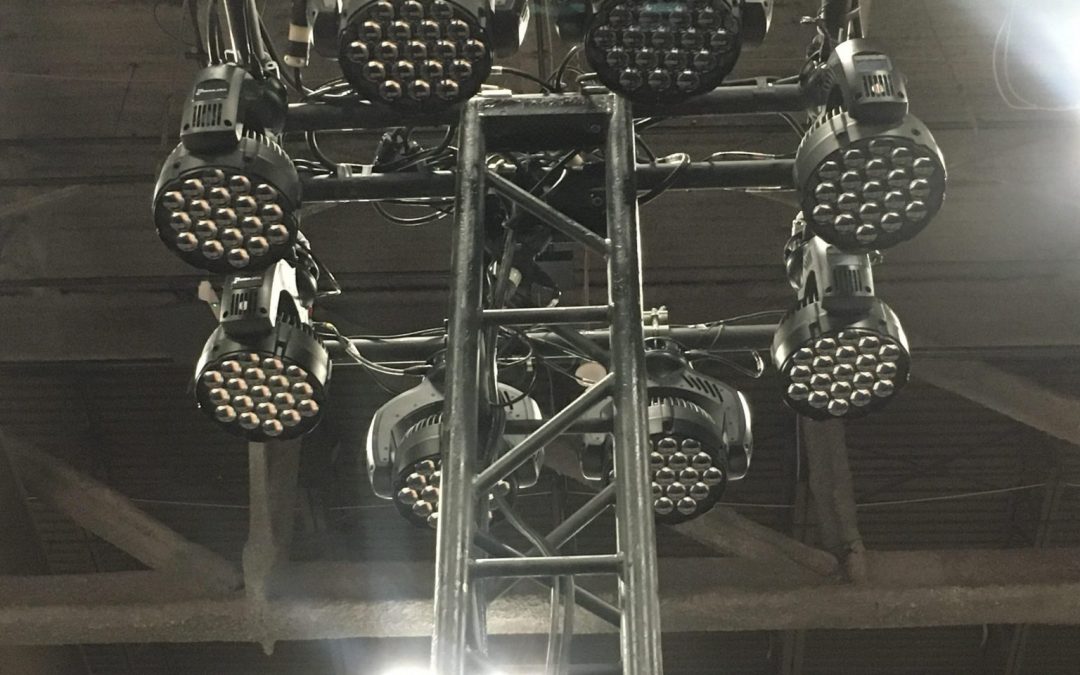
The lighting design was done by Michael Creason of Visionary Light & Media; Creason, Barton and PRG have partnered together for several of these branded events. For this year’s annual event, the lighting gear was expansive: 386 GLP Impression X4’s, 24 Chroma-Q Color Force II 72s, six Chroma-Q Color Force II 48s, 60 SGM P-1 RGBW washes and eight Arri SkyPanel S60s for the broadcast studio.
For the project, Creason needed to “Avoid under carpet hardwired DMX connections, eliminate excessive cable trusses and rigging and to simplify last minute lighting location changes. We also needed to have the ability to quickly add last-minute lighting positions, such as adding the control of the broadcast area from the main control area,” says the lighting designer. There was also the problem of exposed power cords as well.
Creason had a solution to all these issues. A wireless solution from RC4 Wireless; specifically, their 900MHz series of products that are designed specifically for busy wireless environments. Creason has been working with RC4 products for several years; Barton was an RC4 Wireless virgin. “The RC4 gear worked flawlessly; there were no issues whatsoever, they delivered and it did exactly what they said it would do. It was perfect,” says Barton.
Working in the 900MHz frequency was key to the success of the project. “The 900MHz frequency was another reason we went with RC4. We had to be in that frequency because of the numerous amount of wireless and different frequencies throughout that venue; we had audio in that building that was using wireless, not to mention all the surrounding 40 or 60 breakout rooms, a keynote session and wireless headsets for demos; there was a crazy amount of stuff,” admits Barton. Lighting Programmer/System Tech, Robert Spehn adds: “I can tell you that RC4M-900MHz is the only wireless DMX connection I have seen work this easy without any hiccups.”
For the expo floor, Creason used eleven RC4Magic-900SX DMXio-HG Data Transceivers in transmitter mode and 25 RC4Magic-900SX DMXio-HG Data Transceivers in receiver mode. Spehn has more details: “We needed eleven universes of wireless DMX. There were multiple locations where we had up to five transceivers that were transmitting flawlessly because of the setup done by RC4,” he says
From a wireless standpoint, the project was extremely collaborative. “I contacted RC4 inquiring about a full turn-key system. I conveyed to Jim [James D. Smith, CEO and Chief Product Developer at RC4 Wireless] the system needs and shared a full set of ground plans indicating RC4 transmitter and receiver locations. In turn, Jim designed and configured the power settings and masking for each transmitter based on the ground plan details. Jim had also set up and tested the full system before shipping,” says Creason.
There was extensive work done in-house at RC4 Wireless before the product was shipped to Creason and his team on site. “We had to individually program forty 900MHz DMXios spanning across 11 active universes and one spare universe operating under nine channel masks,” explains Anna Shelton, System Configuration Specialist at RC4 Wireless. Channel masking is a configuration process that adds another level of data security and enables the device to avoid other signals in that band. Shelton continues: “Some of the masks overlapped, but the distance between them in the 861,230 Sq. Ft. convention center enabled them to operate without interference. It took careful planning, universe matching, and studying the customers blueprint. We didn’t really have time to fix anything if it went wrong – this had to be right from the get-go. Also, since we programmed everything to the last detail, the user did not even have to press a single button or set up anything that required specialized knowledge. It was quite literally plug and play.” Creason adds: “Upon receiving the order, Robert noted that the packaging and labeling was very comprehensive and easy to understand. All and all, we hit the easy button with RC4.”
In terms of his experience with RC4’s customer service, Spehn notes: “There was always someone friendly and ready to help each time I have called.”
Creason has only good things to say about RC4 Wireless. “I have had almost zero luck with wireless gear until I started using RC4. Knock on wood – I have not had one problem with RC4 gear. We powered up the system, and it all worked!” he says. Spehn adds: “Hands down RC4Magic-900 is the best wireless DMX and they are only products that I would put my name behind in a mission critical environment.” RC4 Wireless made an impression with Barton as well. “We will definitely be using RC4 again for future projects.”
In the end, Shelton confides, “I’d like RC4 to be known as a reliable provider of the best wireless technology on the market, and I think this particularly daunting and intensive project is a shining example of our abilities to be just that. I’m honestly not sure if any other company has devoted their entire being to doing what we do and the way we do it. It says a lot that a customer can be free to come to us with their craziest ideas and we make it work. Jim is impressive in the way he is able to provide people with the most customized products that exactly fit their needs, and we are there to help the user every step of the way in making it an easy — and even enjoyable — process to make their vision come to life.”
by boss | Dec 19, 2019
‘America’s Got Talent’ has been at the forefront of prime time television for over a decade with a vast array of performers; from magicians to ventriloquists, dancers to singers, the show has it all. Since 2014, ‘America’s Got Talent’ has relied on the incomparable and iconic design firm, Full Flood Inc. for all of their Emmy-nominated lighting. The Full Flood team, headed by Lighting Designer Noah Mitz and Lighting Directors Michael Berger and Will Gossett, partnered with RC4 Wireless to provide AGT with all of their wireless dimming and DMX needs.
“Each week at AGT the creative team comes up with ideas that sometimes require battery-powered, wireless controlled devices,” notes ‘America’s Got Talent’ Best Boy Scott Beck. Full Flood then turned to the RC4 Wireless 900MHz series of products for their wireless needs. “We exclusively use 900MHz products on our shows,” comments Lighting Director Michael Berger. “There is so much else within the wireless spectrums here — cameras, microphones, internet, Clear-Com, and so on — that this was the safest spectrum everyone felt comfortable with.”
RC4 was the first wireless dimming firm to be authorized by the FCC to use the 900MHz frequency band. Beck is a fan of RC4’s 900MHz products as well. “They work great because their frequencies are far from other devices, so we don’t have signal conflicting issues and signal strength has been solid in large arenas.” adds Beck.
James D. Smith, Chief Product Developer and CEO of RC4 Wireless adds: “There are some important differences between what RC4 and other firms are doing in 900MHz; just saying we’re in the 900MHz band is like saying we are both driving on Interstate highways. Other firms with 900MHz are using much, much lower RF power levels, which will be limiting their range a lot compared to us. The RC4Magic-900 line of products can transmit with up to 250mW of power, delivering a range that has exceeded 1000 feet for many users.”
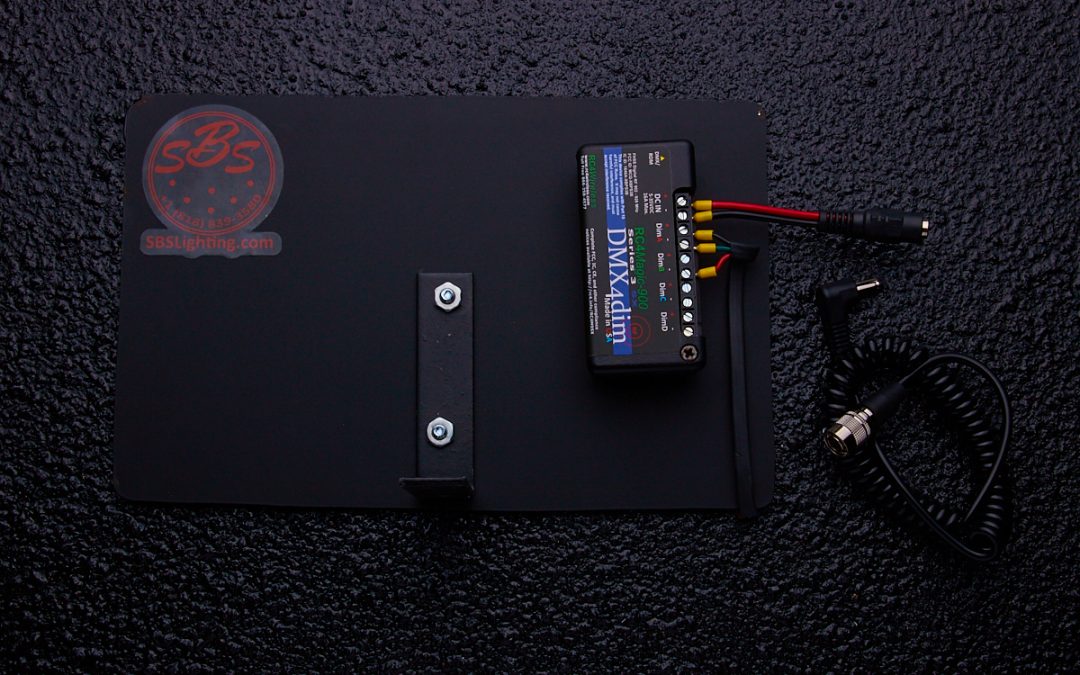
For ‘America’s Got Talent’, the team paired RC4 Wireless Series 3 DMX4dim with the Steadicam rig. “The wireless needs for this show derived from a controllable fill light we desired on the Steadicam rigs,” Berger explains. “We found ourselves in lots of tight places doing host intros where a traditional lite panel or key light source would not work; adding a controllable, lightweight LED rig directly onto the camera gave us an easily deployable solution which was always nearby even as things within the show structure changed.” Beck adds, “We had an SBS Lighting Steadi Fill Light on the Steadicam, which is 16v Bi-Color White LED light that fits around the camera’s teleprompter and driven by a 2 channel 900MHz dimmer–16v @1.6amps. ”The DMX4dim was a success on the set and gave Full Flood a new tool in their lighting arsenal. “The camera operators have responded well to the low weights of the dimmer units. Its success on this project has pushed us towards using it on other projects like ‘The Oscars’, ‘The Grammys’, ‘The Tony Awards’ and the ‘BET Awards’. Its size and reliability have pushed us towards incorporating the products into other aspects of the show. Including dimming practical props, incorporating pixel tape into musical instruments,” says Berger.
The Steadicam wasn’t the only place that the Full Flood team used RC4 Wireless products. “We had a wireless eye light on a moving golf cart, which was a 4’ run of SBS Lighting Bi-Color 240 LED. 12v 4amp at full driven by a 2 channel 900MHz dimmer. We also used an RC4 Wireless DMXpix receiver [in 900MHz] on guest performer Brian King Joseph’s LED pixel violin,” says Beck.
Beck handled the lighting wireless programming on the set. “Programming is a breeze with the one-click system to change DMX address and modes. However, I set the modes once and use the same settings on each show. So, I don’t often switch between modes or addresses.” Beck also has a tip to pass along: “By addressing my wireless receivers to the 450 and above DMX channels I’m able to be added a device to a lighting system after the programmer has patched numerous moving lights in the beginning of a DMX Universe.”
Vocalist Kodi Lee got the final nod from judges Simon Cowell, Howie Mandel, Gabrielle Union, and Julianne Hough and won this season of ‘America’s Got Talent’. The show has already been renewed for its 15th season.
by boss | Nov 7, 2019
‘The Iliad’ is an epic piece of classical poetry and has been transformed for the theater in ‘An Iliad’; earlier this year, it was presented by the Long Wharf Theatre. The Director was Whitney White, with Lighting Design by Kate McGee. “’An Iliad,’ from its conception to its present incarnation at Long Wharf, is designed to overcome every objection on which theatergoers indifferent to Homeric Greek rely when confronted with such classics. As evident in Long Wharf’s superb production, ‘An Iliad’ is as relevant and timely as the blood in your veins,” notes E. Kyle Minor of the New Haven Register.
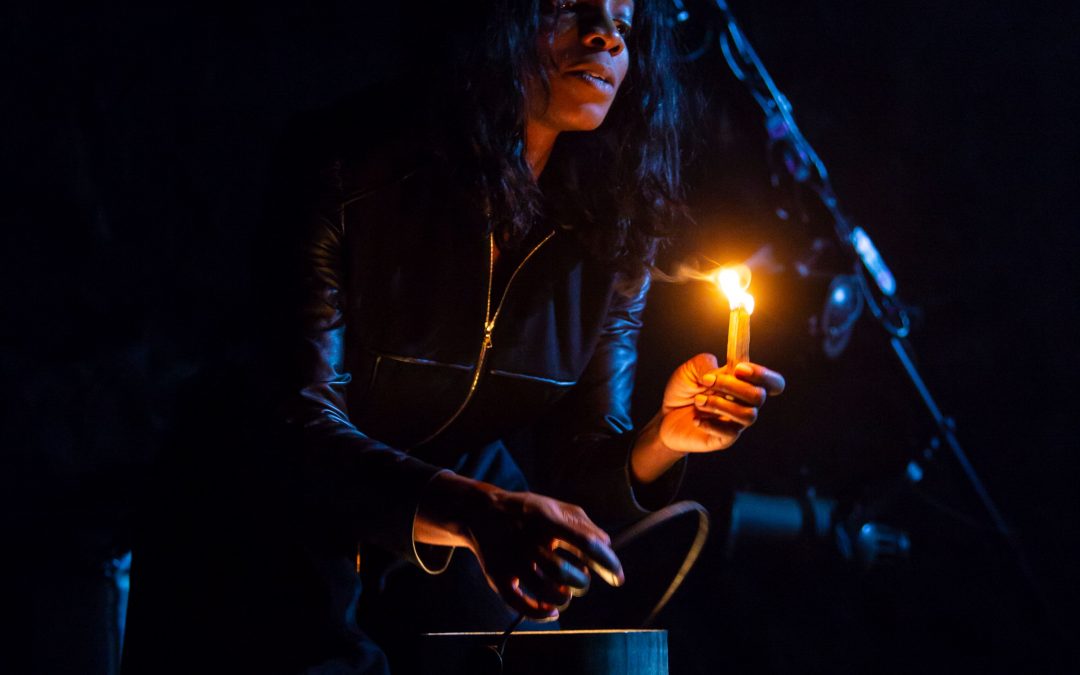
For the production, Lighting Supervisor James Horban needed a wireless solution. He explains: “For ‘An Iliad’, we needed an effect that appeared as though a fire was lit and huddled around by the poet. From the Director’s perspective, it was a rather spiritual moment for the poet, and we went the route of lighting a Palo Santo incense stick, which then mimicked lighting a larger fire and gave off the desired smokiness. I knew that we needed a potential high-output solution due to the rock-and-roll lighting design, and I wanted to investigate a solution that gave more flexibility and options than strictly an incandescent source. A wireless solution was needed as the firepot was pulled out of a trapdoor by the poet.”
For his wireless firepot, Horban turned to RC4 Wireless, a brand he’s depended on for the past decade. “Firelight is probably some of the earliest uses of RC4, and it has changed drastically with the advent of LEDs. Our most-recent rendition mixed 3-chip RGB modules around the perimeter with some warm white tape focused in the center, driven by two RC4 DMX2dim’s. The result was the ability to program an effect with a visually red/amber edge around the firepot with a crisper tone in the center when leaned over by the actress. We used two [RC4Magic] DMX2dim units to provide 4-channels of RGBWW LED control, and recycled the sources from the infamous ‘LED scraps bin’” says Horban.
The RC4 Commander control software has also been an integral part of RC4’s usage at Long Wharf Theatre. Horban continues: “Our current show is using 8x DMX2dim RC4 units, and the show prep led me to standardize the addresses of all of our DMX devices in the department; in the past, we had one RC4 at 511, another 444, trying to use easy-to-remember ones here-and-there. It was very disorganized and dysfunctional, to say the least. So I spent the summer playing around with the RC4 Commander to standardize all of the settings across the devices and fixing one that had incorrect ID settings and wouldn’t connect. I like seeing all of the options laid out and presented in the format that RC4 Commander does.”
Like many, Horban has had to contact the RC4 support team; he chose the email route. “Customer support from RC4 was VERY quick, immediate, and solution-focused. One of our RC4 units was missing screws and bam! I had replacements with a complimentary baby screwdriver, which ALWAYS disappear. I needed our ID file for RC4 Commander and had it in my inbox in moments. In terms of customer service, I have only positive things to say!” he notes.
As for people who have not ventured into the world of RC4 Wireless, Horban concludes: “Whatever wireless solution you need, they can provide it. It can be an intimidating realm to enter into, both technologically and expense. We’ve been putting our RC4 units through hell and high water* for years, and they’re still going strong. It seems every show in our season has had some reason to need a wireless solution in some form, and I love the flexibility as one unit can drive 9v candle FX, 12v table lamp, or 24v led solution.”
* this comment is referencing metaphorical high water; although RC4 Wireless does have the best warranty in the industry, it does not cover actual high water or damage from other natural disasters like earthquakes, tsunamis or wildfires.
by boss | Sep 13, 2019
Lil Nas X knows how to make an impact. His hit ‘Old Town Road’ was number one on the Billboard Hot 100 Charts for 19 weeks – the only song to achieve that in the history of the charts. So it was only natural that he would be duly honored when the MTV Video Music Awards came to pass. Lil Nas X was nominated for nine Moonman awards; he won Song of the Year for ‘Old Town Road ft. Billy Ray Cyrus [Remix].’
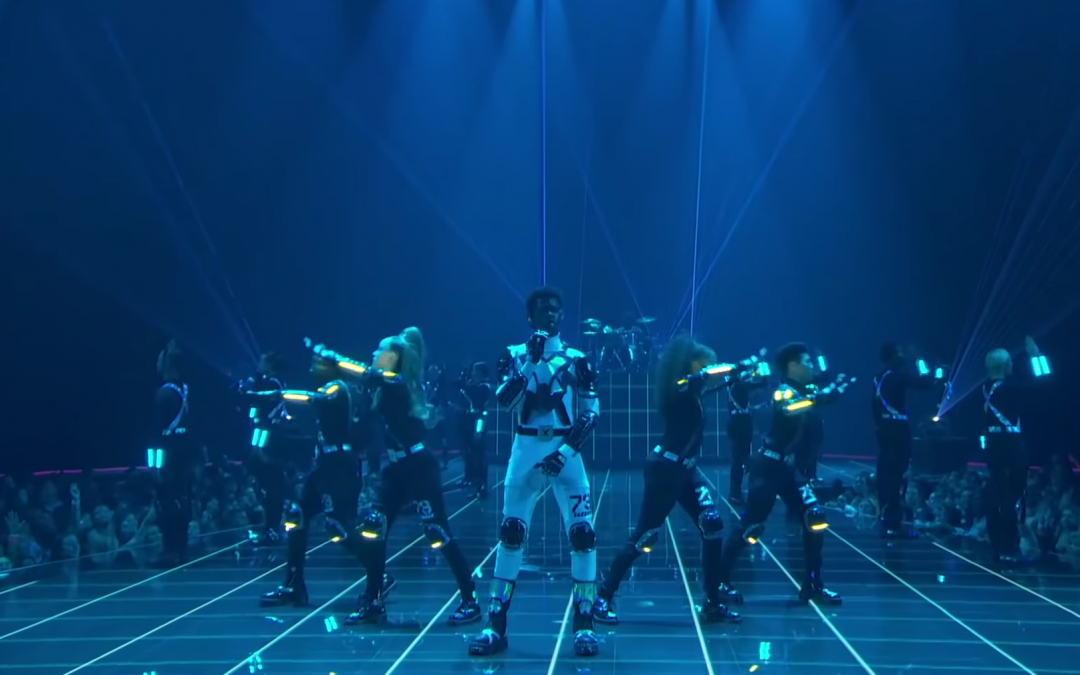
However, the artist’s Song of the Year award wasn’t the high point of the VMAs; that came during the performance of the song ‘Panini’. Rolling Stone online explains: “The performance opened with a cheeky bit that imagined a future where Lil Nas X was not only President of the United States of America but releasing the 3,162nd remix of ‘Old Town Road,’ featuring artists like Young Sandwich, the Ghost of Benjamin Franklin and Old Thug. After a snippet of ‘Old Town Road’, the rapper launched into ‘Panini’, embracing a Tron-like aesthetic as he lip-synced to the tune and moved through some intricate choreography with a cadre of back-up dancers.”
Technology, in the form of wireless 900MHz wireless pixel control, was also part of the production. “We needed to be able to control two universes of wireless DMX across the costumes of 28 dancers,” explains Lighting Programmer Ryan Alexander. Those dancers—and their costumes—created part of the tableau of the Lil Nas X performance.
The VMAs are a live event, and nothing could go wrong. So Alexander and the lighting team turned to RC4 Wireless. “This project was conceived and built very quickly. We weren’t approached until just 10 days before broadcast,” explains James David Smith, CEO and Chief Product Developer at RC4 Wireless.
RC4 Wireless has several lines of products, including their proprietary RC4Magic 2.4GHz and 900MHz products. “We launched our RC4Magic-900 system for lighting at Super Bowl XLIX, and it’s been a workhorse at high-profile live shows ever since,” explains Smith. “It was designed from the ground up to perform flawlessly in the densest wireless environments on the planet, with range and data security like nothing else.”
The RC4Magic-900 series DMXpix was Alexander’s choice for bulletproof wireless at the VMAs. Alexander adds: “The 900MHz products worked great. After getting it set up and having no issues in rehearsals, I was able to see the true power of 900MHz when I turned on the system at the VMAs. I was able to get a clear signal from FOH with all the other wireless flying around the room.”
For the ‘Panini’ performance, Alexander was controlling around 2,000 LEDs with only two universes. “Programming was simple. I configured each wireless DMX device with a unique address,” Alexander explains. The RC4 Patented RC4 Custom Pixel Profiles provide lighting designers with a simple and understandable way to expand the number of pixels they control with a limited number of DMX channels. “The core of CPP,” explains Smith, “is to move data redundancy away from the lighting console and into the little DMXpix pixel controller. Now the lighting console only handles core patterns, and all the replication happens in the costume, prop, or set piece. Thus, the look is the same but the channel count can be vastly reduced.”
During the process, Alexander did have to turn to RC4’s legendary technical support team and received expert advice from Smith himself. Alexander confides: “RC4 customer service was amazing. Jim helped me out a few times along the way.” Smith adds, “Nothing is more important to me than my customers, the people who use RC4 gear every day to create incredible art and beautiful shows. Whether you’re a high school, a church, Cirque du Soleil, or Lil Nas X — our goal is to always provide the best possible support in a timely and comprehensive manner.”
In the end, Alexander concludes: “I was blown away by the reliability of the RC4 system. I have never used a wireless system with such a long-range. The 900MHz works great and I would highly recommend it.”